Episode 29: Existential Therapy: The Paradoxes and Passions of Living

Psychology Life Lessons is a podcast where we listen in on conversations with experts and try to extract life lessons, and maybe a little wisdom.


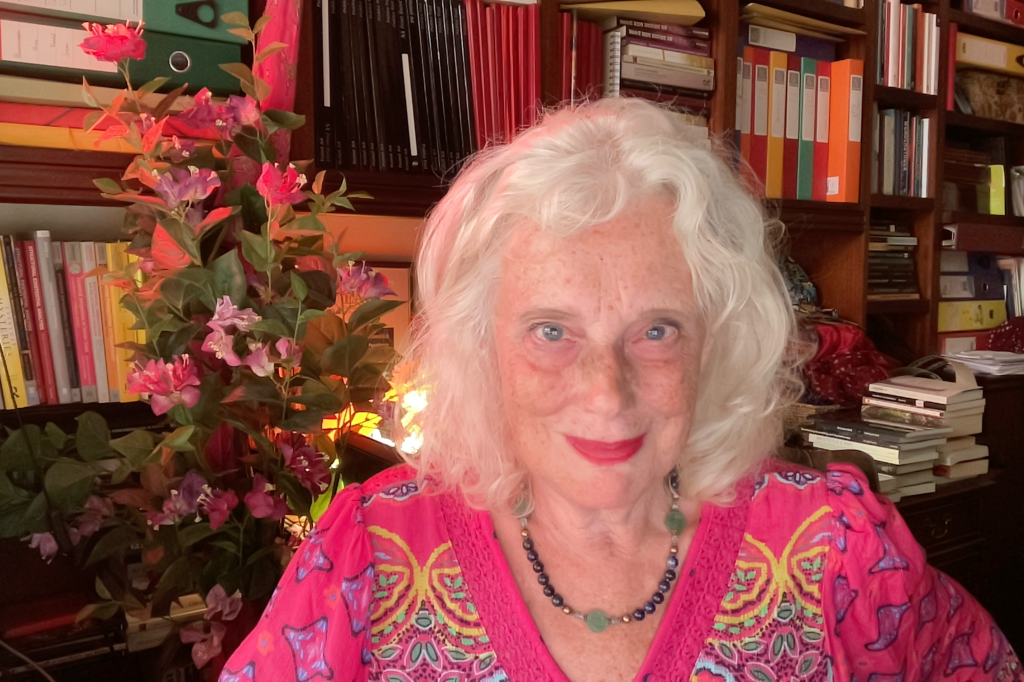
In this episode of Psychology Life Lessons, Dan talks with existential therapist and author Emmy van Deurzen about what it means to live authentically in the face of life’s challenges. Emmy reflects on her journey from the Netherlands to France and eventually the UK, where she became a leading voice in existential therapy and education. She shares how philosophy and psychology can work together to help us navigate freedom, responsibility, and the anxieties that come with uncertainty. Together, they explore why anxiety can be seen as a sign of possibility and what it takes to embrace life’s paradoxes with passion. Emmy’s insights blend decades of clinical work, philosophical reflection, and cultural critique, offering a fresh perspective on human resilience and authenticity.

It’s a conversation that reminds us that life’s challenges and mysteries can also be invitations to maturity and vitality.

Emmy van Deurzen is an existential therapist, counselling psychologist, and philosopher, who has worked in the field since 1973 and who has written numerous books on existential psychology and psychotherapy. Her work has been translated into over 30 languages. She founded the Society for Existential Analysis and its journal in 1988, the Regent’s School of Psychotherapy in 1990, and the New School of Psychotherapy and Counselling (NSPC) in 1996.  She was the driving force behind the First World Congress for Existential Therapy, which was held in London in 2015. This also led to the founding of the Federation for Existential Therapists in Europe (FETE).  Emmy continues to co-direct NSPC, the Existential Academy (EA) and Dilemma Consultancy, with Digby Tantam.  She is a visiting professor with Middlesex University and current President of the worldwide Existential Movement.  Emmy is an international speaker who has given presentations and workshops on five continents. 

Amongst her books are the bestseller Existential Psychotherapy and Counselling in Practice (Sage, 3d edition 2012)Psychotherapy and the Quest for Happiness (Sage, 2009), Everyday Mysteries (Routledge, 2nd ed, 2010), Paradox and Passion (Wiley, 2nd ed 2015) and Rising from Existential Crisis (PCCS books, 2021).

Disclaimer: The content on this site is for informational or educational purposes only, and does not substitute professional medical advice or consultations with healthcare professionals. Additionally, the opinions and viewpoints expressed in this podcast do not necessarily reflect the entities that employ the host or guests.

Episode 28: How to Fall in Love with Questions

Psychology Life Lessons is a podcast where we listen in on conversations with experts and try to extract life lessons, and maybe a little wisdom.


In this episode of Psychology Life Lessons, Dr. Dan Lannin talks with author Elizabeth Weingarten about how to navigate life’s most uncertain moments. Drawing from her new book How to Fall in Love with Questions, Elizabeth explores how big, unanswerable questions about purpose, relationships, and identity can be sources of growth rather than anxiety. She discusses how binary questions and societal “charlatans of certainty” can trap us into seeking fast answers instead of meaningful clarity. Through science, storytelling, and personal reflection, she shares tools for developing a “questions practice” to live more intentionally and patiently. Together, they unpack the cultural roots of impatience, the influence of identity and power on question-asking, and how cultivating courage can help us thrive in the unknown. It’s a powerful reminder that the right questions—not quick answers—can often be a the liberating force we need.

Elizabeth Weingarten is a journalist and applied behavioral scientist who works at the intersection of science and storytelling.

A graduate of Northwestern University’s Medill School of Journalism, she has worked on the editorial staffs of The Atlantic, Slate, and Qatar Today, and was Managing Editor of Behavioral Scientist. Her writing has appeared in publications including The Atlantic, Slate, CNN, The Financial Times, Quartz, Harvard Business Review, and Time.

She has led research programs at the think tank New America, the consultancy ideas42, and at tech companies Torch and Udemy. An in-demand speaker, she has shared her work and conducted workshops at venues including SXSW, the United Nations, the International Monetary Fund, the University of Pennsylvania, Stanford University, and University of Virginia. She lives in Northern California with her husband and son.

Check out her book,  website, and Substack for more of her work!

Disclaimer: The content on this site is for informational or educational purposes only, and does not substitute professional medical advice or consultations with healthcare professionals. Additionally, the opinions and viewpoints expressed in this podcast do not necessarily reflect the entities that employ the host or guests.

🙂

Episode 27: Start Making Sense

Psychology Life Lessons is a podcast where we listen in on conversations with experts and try to extract life lessons, and maybe a little wisdom.


In this episode of Psychology Life Lessons, Dr. Steven Heine joins Dr. Dan Lannin to explore the psychology of meaning in an increasingly fragmented world. Drawing on decades of work in cultural and existential psychology, Dr. Heine explains how cultural contexts shape the way people see themselves, what it means to live a “good” life, and how psychological universals are often misunderstood. They unpack his research on WEIRD societies, the Meaning Maintenance Model, and how humans respond to disruptions in meaning—sometimes by doubling down on existing beliefs. Heine also shares insights from his latest book Start Making Sense, offering practical wisdom for restoring purpose in an age of disconnection. From the loss of community to the numbing effects of social media, the conversation highlights how identity, connection, and culture intertwine in the search for meaning.

Steven J. Heine is Professor of Social and Cultural Psychology and Distinguished University Scholar at the University of British Columbia. After receiving his PhD from the University of British Columbia in 1996, he had visiting positions at Kyoto University and Tokyo University, and was on the faculty at the University of Pennsylvania before returning to British Columbia. He has authored the best-selling textbook in its field, entitled “Cultural Psychology,” and has written two trade book called “Start Making Sense” (2025) and “DNA is not Destiny”(2017). Heine has received numerous international awards and is a fellow of the Royal Society of Canada. 

Heine’s research focuses on a few topics that converge on how people come to understand themselves and their worlds. His research in cultural psychology has explored the key role that culture plays in shaping people’s psychological worlds. He has also conducted much research exploring how people’s essentialist biases make them prone to misunderstand and fear genetic concepts. His most recent work has investigated how people make meaning in the face of meaninglessness, and how they can lead more meaningful lives.

Make sure to check out his new book: Start Making Sense

Disclaimer: The content on this site is for informational or educational purposes only, and does not substitute professional medical advice or consultations with healthcare professionals. Additionally, the opinions and viewpoints expressed in this podcast do not necessarily reflect the entities that employ the host or guests.

🙂

Episode 26: The Art and Science of Helping

Psychology Life Lessons is a podcast where we listen in on conversations with experts and try to extract life lessons, and maybe a little wisdom.


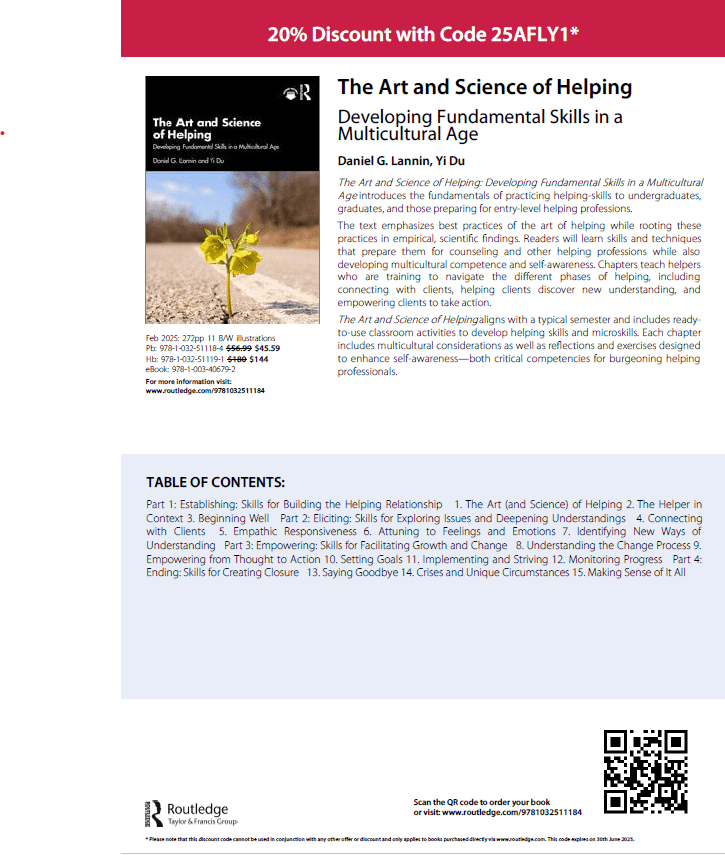
In this episode of “Psychology Life Lessons,” Dr. Yi Du takes over hosting duties to interview Dr. Dan Lannin about their co-authored book, “The Art and Science of Helping.” After introducing Dan’s background, they discuss how effective helping requires both artistic creativity and scientific evidence. Dan shares the powerful “help maze” metaphor from his camp counselor days, where blindfolded children walking in circles could only exit by raising their hand for help—illustrating how seeking help is often the most important first step toward healing. They explore how self-stigma creates additional suffering and prevents help-seeking, and previous negative experiences with vulnerability can further discourage people from reaching out. Both psychologists note a societal “empathy shortage,” attributing it partly to our culture of convenience and immediate gratification. Throughout their conversation, they emphasize that becoming an effective helper requires self-knowledge and intentional practice, while highlighting human resilience symbolized by their book’s cover image of a flower growing through concrete.

Dr. Yi Du is a licensed psychologist in California with a Ph.D. in Counseling Psychology from Iowa State University and postdoctoral training at UC Berkeley. She has been training and supervising future mental health professionals since 2012, helping them develop their skills in therapy, multicultural awareness, and professional growth.

Yi’s approach to therapy is deeply rooted in human connection, blending emotion-focused and humanistic principles with self-compassion and mind-body awareness. She integrates Western psychological research with Eastern philosophical traditions, striving to create a balanced approach to mental health.

As a researcher, she explores topics like mental health interventions, cultural adaptation, and the experiences of international students. She has also taught undergraduate and graduate courses on personal growth, career development, and research methods, earning recognition for her teaching and mentorship.

Above all, Yi is passionate about helping future helpers grow, making psychological insights practical, relatable, and meaningful in real-world settings.

Learn more about Dr. Yi Du here.

Here is some more information about The Art and Science of Helping: Developing Fundamental Skills in a Multicultural Age:

Disclaimer: The content on this site is for informational or educational purposes only, and does not substitute professional medical advice or consultations with healthcare professionals. Additionally, the opinions and viewpoints expressed in this podcast do not necessarily reflect the entities that employ the host or guests.

🙂

Episode 25: Loving Someone with a Mental Illness or History of Trauma

Psychology Life Lessons is a podcast where we listen in on conversations with experts and try to extract life lessons, and maybe a little wisdom.


In this episode, Dr. Dan Lannin interviews Dr. Michelle Sherman, a clinical psychologist with 30 years of experience and coauthor of “Loving Someone with a Mental Illness or History of Trauma.” Dr. Sherman shares her journey from working with veterans and their families to co-authoring books with her mother aimed at supporting families affected by mental illness. She discusses the unique challenges faced by those who love someone with mental illness–from navigating healthcare systems to managing personal boundaries. Dr. Sherman offers practical insights on emotional validation, understanding PTSD, and maintaining hope while caring for others. The conversation illuminates how combining professional expertise with genuine compassion can help both individuals with mental illness and their loved ones find paths toward healing and growth.

Dr Sherman is a board-certified clinical psychologist, a Fellow of the American Psychological Association, and the Editor of the APA journal, “Couple and Family Psychology: Research and Practice.” After serving 17 years in the VA healthcare system, and over two decades in academia (professor at the University of Oklahoma and Minnesota), she is now in private practice. She was named the American Psychological Association’s Family Psychologist of the Year in 2022.

Check out Dr. Sherman’s books and other resources here.

Disclaimer: The content on this site is for informational or educational purposes only, and does not substitute professional medical advice or consultations with healthcare professionals. Additionally, the opinions and viewpoints expressed in this podcast do not necessarily reflect the entities that employ the host or guests.

🙂

Episode 24: Smart, Not Loud

Psychology Life Lessons is a podcast where we listen in on conversations with experts and try to extract life lessons, and maybe a little wisdom.


In this episode, Dr. Dan Lannin interviews Jessica Chen, a global communications expert and author of Smart, Not Loud: How to Get Noticed at Work for All the Right Reasons. Jessica shares her journey from being an Emmy award-winning journalist to founding a communications training company that has reached millions. She discusses the challenges of navigating “quiet” versus “loud” cultures in the workplace, emphasizing the importance of self-advocacy, effective communication, and mindset. Jessica offers practical tips on how to build a career brand, advocate for oneself, and celebrate personal achievements without losing authenticity. The conversation highlights how embracing your unique values while learning to adapt can lead to professional success and personal fulfillment.

Jessica Chen is an Emmy-Award Winner and the CEO of Soulcast Media. She has been featured in Forbes, Fortune, Entrepreneur and Market Watch, Inc., and is a highly requested global event keynote speaker on cross-cultural communications and developing workplace confidence and executive presence. Her company, Soulcast Media has worked with top global organizations, including Google, LinkedIn, Mattel, Harvard Business School, Draftkings, the CDC and many more. Her communications courses are consistently ranked as most popular and have reached over 2 million learnersHer unique approach has transformed people’s speaking, executive presence and authority.

Prior to starting Soulcast Media, Jessica was an award winning TV News Reporter. She graced the television networks of ABC10 News, NBC 4News as well as stations in the greater New York City region.

Order Jessica Chen’s upcoming book, “Smart, Not Loud: How to Get Noticed at Work for All the Right Reasons” HERE

*Just named a Next Big Idea Must Read*

Paper-plane

Linkedin

Instagram

Twitter

Facebook

Youtube

Disclaimer: The content on this site is for informational or educational purposes only, and does not substitute professional medical advice or consultations with healthcare professionals. Additionally, the opinions and viewpoints expressed in this podcast do not necessarily reflect the entities that employ the host or guests.

🙂

Episode 23: Give to Grow

Psychology Life Lessons is a podcast where we listen in on conversations with experts and try to extract life lessons, and maybe a little wisdom.


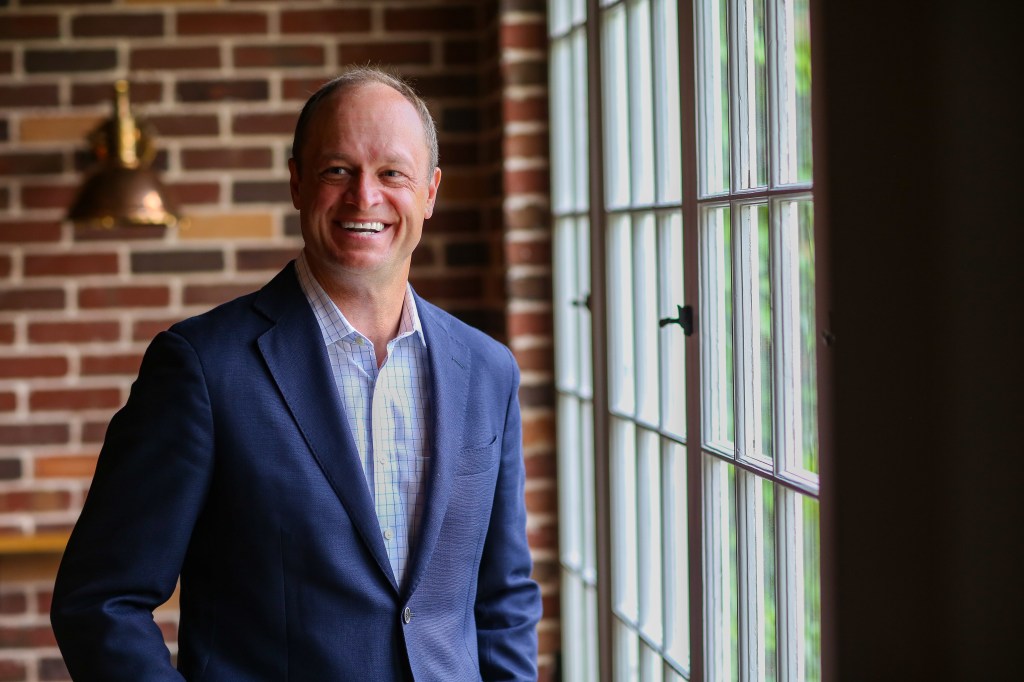
In this episode, Dr. Dan Lannin chats with Mo Bunnell, the founder of a company that helps experts build better relationships and grow their businesses. Mo shares insights from his upcoming book, Give to Grow, which focuses on a proactive and mutually beneficial approach to business relationships. He talks about the importance of engaging with clients, understanding their problems, and offering real experiences of working together. Mo challenges traditional sales methods, advocating for a strategy centered on helping others. The conversation highlights the value of being proactive, staying authentic, and the lasting impact of meaningful connections.

Mo Bunnell helps complex organizations grow by scaling business development skills across their organizations and creating a growth-oriented culture. He’s the author of Give to Grow, The Snowball System, the host of the podcast Real Relationships Real Revenue and the founder of Bunnell Idea Group (BIG), who has trained tens of thousands of professionals.

BIG’s clients have used Mo and his team’s GrowBIG® training to give their experts a system for growth that creates deep relationships, gives a comprehensive business development framework and dare we say, is fun to use.

Mo started out his career as an expert himself, passing all the actuarial exams to earn their highest designation: Fellow of the Society of Actuaries. Today, Mo enjoys working with hundreds of clients including some the largest, most prestigious service-based organizations. Mo and his wife of over 30 years, Becky, enjoy spending time with their friends and two adult daughters. Outside of work he enjoys working out, backpacking, and playing ultimate frisbee at the national and world levels. Becky and Mo live in Atlanta Georgia with their four horses, two cats, dog, bird and miniature donkey, Louie Hamilton.

Disclaimer: The content on this site is for informational or educational purposes only, and does not substitute professional medical advice or consultations with healthcare professionals. Additionally, the opinions and viewpoints expressed in this podcast do not necessarily reflect the entities that employ the host or guests.

🙂

Episode 22: New Happy

Psychology Life Lessons is a podcast where we listen in on conversations with psychology experts and try to extract life lessons, and maybe a little wisdom.


In this episode, Dr. Dan Lannin interviews Stephanie Harrison, the founder of the New Happy company. Stephanie explains her approach to happiness, aimed at enhancing well-being. She stresses the importance of making psychological research practical and accessible so that it can be applied to everyday life. Stephanie offers perspectives that challenge common societal views on happiness and suggests a new approach that emphasizes inherent self-worth and the value of community connections. The discussion examines the negative impacts of societal pressures and underscores the need to redefine happiness, focusing on personal expression and helping others.

Stephanie Harrison is an expert in the science of happiness and the creator of the New Happy philosophy. She has a master’s degree in positive psychology from the University of Pennsylvania, where she was later an instructor, and was previously the Director of Learning at Thrive Global, leading the development of science-based programs that improve well-being.

Her company, The New Happy, has revolutionized the way that people understand and pursue happiness. Their artwork, newsletter, videos, podcast, and resources reach millions of people around the world every month. She is a Harvard Business Review and CNBC contributor and her expertise has been featured in publications such as Fast Company, Forbes, and Architectural Digest. She is a regular speaker at Fortune 500 companies and advises on employee well-being and company culture.

Her first book, NEW HAPPY, will be released by Penguin Random House in May 2024.

Social 

The New Happy

Stephanie Harrison

Disclaimer: The content on this site is for informational or educational purposes only, and does not substitute professional medical advice or consultations with healthcare professionals. Additionally, the opinions and viewpoints expressed in this podcast do not necessarily reflect the entities that employ the host or guests.
🙂

Episode 21: Unlearning Silence

Psychology Life Lessons is a podcast where we listen in on conversations with psychology experts and try to extract life lessons, and maybe a little wisdom.


Today we’re joined by Elaine Lin Hering, an expert in communication, collaboration, and conflict management. With a career that spans multiple continents, Elaine brings a wealth of experience. She’s here to discuss her upcoming book, “Unlearning Silence: How to Speak Your Mind, Unleash Talent, and Live More Fully.” Get ready for an insightful and empowering conversation on harnessing the power of effective communication in every aspect of life.

Unfortunately the Zoom recording software had a hiccup around minute 45, and Dan’s voice sounds like he’s turning into an evil robot for the last few questions. Elaine’s voice sounds fine though.

Elaine Lin Hering is a facilitator, author, and speaker. She works with organizations and individuals to build skills in communication, collaboration, and conflict management. She has worked on six continents and facilitated executive education at Harvard, Dartmouth, Tufts, UC Berkeley, and UCLA. She is the former Advanced Training Director for the Harvard Mediation Program and a Lecturer on Law at Harvard Law School. She has worked with coal miners at BHP Billiton, micro-finance organizers in East Africa, mental health professionals in China, and senior leadership at the US Department of Commerce. Her clients include American Express, Chevron, Google, Nike, Novartis, PayPal, Pixar, and the Red Cross. She is the author of the forthcoming book Unlearning Silence: How to Speak Your Mind, Unleash Talent, and Live More Fully (Penguin, 2024).

LINKS

https://www.linkedin.com/in/elainelinhering

https://www.instagram.com/elainelinhering

Penguin Random House

Amazon

Barnes and Noble

Bookshop Preorder incentives available here: https://elainelinhering.com/book/#preorder

Disclaimer: The content on this site is for informational or educational purposes only, and does not substitute professional medical advice or consultations with healthcare professionals. Additionally, the opinions and viewpoints expressed in this podcast do not necessarily reflect the entities that employ the host or guests.

🙂

Episode 20: Scaling Up Change

Psychology Life Lessons is a podcast where we listen in on conversations with psychology experts and try to extract life lessons, and maybe a little wisdom.

In this episode, Dr. Steve Joordens shares his pioneering work in leveraging technology to offer quality education to large classes at the University of Toronto. He passionately discusses his advocacy work, from increasing diversity in DNA databases to combating loneliness among students and challenging the aggressive marketing of sports gambling. Joordens’ innovative approach to education, combined with his commitment to social causes, offers valuable insights into the power of technology and education to drive societal change.

Steve Joordens is a Professor of Psychology who teaches primarily at the University of Toronto, but also offers several “Massive Open Online Courses” with coursera.ca and a Human Memory Through The Lifespan course with The Great Courses.  He is also Director of the Advanced Learning Technology Labs, and one of the technologies to come from that lab – peerScholar – is now used as an institutional solution for formative peer and self assessment in 10 countries.  A passionate teacher and educational researcher, Steve also advocates for a variety of causes including banning the marketing of gambling, and supporting the GenWell Initiative, a NFP directly taking on the loneliness pandemic.

To learn more about peerScholar, check out the videos at videos.peerScholar.com or visit peerScholar.com.  You could also listen to by the Canadian Psychological Association (https://www.youtube.com/watch?v=rE7CoZ0hh50).

To learn more about Steve’s efforts to support olympian Bruce Kidd and his effort to ban the marketing of gambling, listen to this PodCast hosted by the Canadian Psychological Association (https://www.youtube.com/watch?v=SsuvHirevSg).

To learn more about GenWell and their attempts to spread the gospel of social connection, see: https://www.genwellproject.org/ 

If you’re curious about the indigenous welcome activity that Steve mentions, you can see a video outlining it here: https://drive.google.com/file/d/1ifVnzXqkfo5i7HhuV8oW6wU-C_PiVm1X/view 

You can email Steve with any thoughts, reactions or questions you might have via Steve.Joordens@utoronto.ca

Disclaimer: The content on this site is for informational or educational purposes only, and does not substitute professional medical advice or consultations with healthcare professionals. Additionally, the opinions and viewpoints expressed in this podcast do not necessarily reflect the entities that employ the host or guests.

🙂

Episode 19: Learned Excellence

Psychology Life Lessons is a podcast where we listen in on conversations with psychology experts and try to extract life lessons, and maybe a little wisdom.

In this episode, Dr. Dan Lannin has a conversation about the mental disciplines in high-end performance with Dr. Eric Potterat and Alan Eagle–coauthors of a new book called Learned Excellence. Eric developed the US Navy SEALs mental toughness curriculum and has worked with thousands of top athletes, elite military personnel, business executives, and first responders. This podcast explores some of the most important principles and practices relevant to being a top performer, and listeners will likely walk away with a few practical tips for improving their lives.

Eric Potterat, PhD, is a clinical and performance psychologist and a leading expert in individual and organizational performance optimization. Eric retired as a commander from the US Navy after twenty years of service, during which he helped create the mental toughness curriculum used during Navy SEALs BUD/S training. Eric spent several years as the director of specialized performance for the Los Angeles Dodgers and has also worked with Red Bull athletes, the US Women’s national soccer team, the Miami Heat, and numerous Olympic athletes, first responders, business leaders, and NASA astronauts.

Alan Eagle is an author and executive communications consultant, helping leaders and companies shape and tell their stories. He spent 16 years at Google, partnering with executives to communicate the company’s story to clients, partners, employees, and the public. He is the co-author of the books How Google Works and Trillion Dollar Coach, and the author, all by himself, of seven letters-to-the-editor published in Sports Illustrated. He has never won the New Yorker Caption Contest.  

 Disclaimer: The content on this site is for informational or educational purposes only, and does not substitute professional medical advice or consultations with healthcare professionals. Additionally, the opinions and viewpoints expressed in this podcast do not necessarily reflect the entities that employ the host or guests.

🙂

Episode 18: The Friction Project

Psychology Life Lessons is a podcast where we listen in on conversations with psychology experts and try to extract life lessons, and maybe a little wisdom.

In this episode, Dr. Dan Lannin has a conversation about leadership with Dr. Huggy Rao–coauthor of a new book with Dr. Robert Sutton called The Friction Project. Sutton and Rao have studied leaders and organizations for decades and learned valuable lessons about how friction works–to either hinder productivity or enhance it. In our conversation Huggy provides insight into how smart leaders make the right things easier and the wrong things harder. He also shares a few profound life lessons that apply to life, relationships, and work.

Hayagreeva “Huggy” Rao is Atholl McBean Professor of Organizational Behavior and Human Resources, Graduate School of Business, Stanford University. He studies collective action, and is the author of Market Rebels: How Activists Make or Break Radical Innovations. Rao has won research and teaching awards, and has published more than 50 research papers and monographs. He often leads workshops and is academic director of several Stanford executive programs including Soul of a Startup: Young Presidents Organization, and with Bob Sutton Customer-focused Innovation. Rao tweets @huggyrao.

 Disclaimer: The content on this site is for informational or educational purposes only, and does not substitute professional medical advice or consultations with healthcare professionals. Additionally, the opinions and viewpoints expressed in this podcast do not necessarily reflect the entities that employ the host or guests.

🙂

Episode 17: Thinking Faster and Talking Smarter

Psychology Life Lessons is a podcast where we listen in on conversations with psychology experts and try to extract life lessons, and maybe a little wisdom.

In this episode, Dr. Dan Lannin has a conversation with Matt Abrahams–a world expert on communication from Stanford University. Matt shares his wisdom about communicating in impromptu settings, and there are multiple practical take-aways from this conversation.

About MATT ABRAHAMS:

Matt Abrahams is a leading expert in communication with decades of experience as an educator, author, podcast host, and coach. As a Lecturer in Organizational Behavior at Stanford University’s Graduate School of Business, he teaches popular classes in strategic communication and effective virtual presenting. He received Stanford GSB’s Alumni Teaching Award in recognition of his teaching students around the world. When he isn’t teaching, Matt is a sought-after keynote speaker and communication consultant.

Matt has helped countless presenters improve and hone their communication, including some who have delivered IPO road shows as well as TED, World Economic Forum, and Nobel Prize presentations. His online talks garner millions of views and he hosts the popular, award-winning podcast Think Fast, Talk Smart: The Podcast. He is the author of Think Faster, Talk Smarter: How to Speak Successfully When You’re Put on the Spot. His previous book Speaking Up without Freaking Out: 50 Techniques for Confident and Compelling Presenting has helped thousands of people manage speaking anxiety and present more confidently and authentically.

 Disclaimer: The content on this site is for informational or educational purposes only, and does not substitute professional medical advice or consultations with healthcare professionals. Additionally, the opinions and viewpoints expressed in this podcast do not necessarily reflect the entities that employ the host or guests.

🙂

Episode 16: Improv Wisdom

Psychology Life Lessons is a podcast where we listen in on conversations with psychology experts and try to extract life lessons, and maybe a little wisdom.

In this episode, Dr. Dan Lannin has a conversation with Patricia Ryan Madson–a world expert on incorporating principles of improvisation into everyday life to improve health, well-being, and performance. Patricia shares some of her improv wisdom with the podcast, highlighting four important As: Attention, Acceptance, Appreciation, and Action.

About PATRICIA RYAN MADSON:

Patricia Ryan Madson is a world authority on improvising in everyday life.  She is the author of IMPROV WISDOM: Don’t Prepare, Just Show Up. Random House, Bell Tower Books, 2005.  Her book has been translated into nine languages and is also an Audio and Ebook. Patricia is a professor Emerita from Stanford University where she taught since 1977. In their Drama Department she served as the head of the undergraduate acting program and developed the improvisation program. In 1998 she was the winner of the Lloyd W. Dinkelspiel Award for Outstanding Innovation in Undergraduate Education at Stanford. She is a frequent speaker for business and educational groups. Her corporate clients have included:  IDEO, Google, Gap Inc.’s Executive Leadership Team, The Lucille and David Packard Foundation, the Banff Centre for Leadership, Sun Microsystems Japan Division, Apple Computers, Adobe Systems, and Price Waterhouse.  She lives in El Granada, California with her husband Ronald and an elderly cat named Lyra.

Web pages:
www.improvwisdom.com    

www.improvwisdom.blogspot.com

 improvwisdom@gmail.com

Disclaimer: The content on this site is for informational or educational purposes only, and does not substitute professional medical advice or consultations with healthcare professionals. Additionally, the opinions and viewpoints expressed in this podcast do not necessarily reflect the entities that employ the host or guests.
🙂

Episode 15: Blissed, Blessed, Pissed, and Dissed

Psychology Life Lessons is a podcast where we listen in on conversations with psychology experts and try to extract life lessons, and maybe a little wisdom.

In this episode, Dr. Dan Lannin has a conversation with Bill O’Hanlon–a renaissance man who has a distinguished career as a therapist, writer, public speaker, and now as a professional songwriter. Among other things, Bill talks about four energies that we can pay attention to for guidance in our lives–blissed, blessed, pissed, and dissed.

About Bill O’Hanlon:

Bill O’Hanlon has been playing guitar, piano and writing songs for over 50 years. In recent years, he’s gotten more serious about songwriting and has co-written more than 300 songs a year for the past few years and over 1,400 songs total. Bill has gotten over 79+ cuts of his songs with independent artists and several sync (TV, movies and commercials) placements. He writes many different genres of music, from singer-songwriter to country to pop to rock to jazz and even some hip-hop, since his co-writers bring musical influences that aren’t his main strengths or interests. He works with several writing/production teams for sync, including iDO and DOLL.

Bill was chosen as Songwriter of the Year in 2022 by SongTown, an online songwriting community.

He has also written 40 books, the last three of which are about songwriting. Song Building: Mastering Lyric Writing (https://www.amazon.com/Song-Building-Mastering-SongTown-Songwriting-ebook/dp/B07WJWQB78/),The Songwriter’s Guide to Mastering Co-Writing (https://www.amazon.com/Songwriters-Guide-Mastering-Co-Writing-Techniques-ebook/dp/B07N6N4L23/), and Mastering Melody Writing (https://www.amazon.com/Mastering-Melody-Writing-Songwriters-Repetition/dp/1098364333/) co-written with hit songwriters Marty Dodson and Clay Mills.

Bill was formerly a psychotherapist and speaker, traveled throughout the world for 30+ years, giving over 3700 talks and workshops before putting his work online and staying put at home most of the time. One of his books (Do One Thing Different) was featured on Oprah.

Disclaimer: The content on this site is for informational or educational purposes only, and does not substitute professional medical advice or consultations with healthcare professionals. Additionally, the opinions and viewpoints expressed in this podcast do not necessarily reflect the entities that employ the host or guests.

🙂

Episode 14: Creativity…Finding the Balance

Psychology Life Lessons is a podcast where we listen in on conversations with psychology experts and try to extract life lessons, and maybe a little wisdom.

Drs. Dan Lannin and James C. Kaufman

In this episode, Dr. Dan Lannin has a conversation with Dr. James C. Kaufman, Ph.D., about creativity and how it can affect our personal and professional lives. James is one of the world experts on creativity, and it is fascinating to learn from him about how creativity is conceptualized, the ways it can manifest, and the meaning it often provides.

If this topic interests you, please follow up and read more of Dr. James Kaufman’s work. You won’t be disappointed.

About Dr. James C. Kaufman:

Dr. James C. Kaufman is a Professor of Educational Psychology at the Neag School of Education at the University of Connecticut. He has written or edited more than 50 books including two books coming out in 2023: The Creativity Advantage (Cambridge) and Lessons in creativity from musical theatre characters (Routledge; with award-winning composer Dana P. Rowe. Kaufman has won awards from Mensa, the American Psychological Association, the National Association for Gifted Children, and many others. He has edited books on pseudoscience and animal cognition with his wife, Allison, tested Dr. Sanjay Gupta’s creativity on CNN, written a book on bad baseball pitchers with his father, and written a musical, Discovering Magenta, which premiered in NYC a few years ago.

Disclaimer: The content on this site is for informational or educational purposes only, and does not substitute professional medical advice or consultations with healthcare professionals. Additionally, the opinions and viewpoints expressed in this podcast do not necessarily reflect the entities that employ the host or guests.

🙂

Episode 13: The Power of Play

Psychology Life Lessons is a podcast where we listen in on conversations with psychology experts and try to extract life lessons, and maybe a little wisdom.

Dan Lannin and Clay Drinko

In this episode, Dr. Dan Lannin has a conversation with the author and educator Clay Drinko, Ph.D., about how to apply principles of improvisation to a person’s everyday life. Performing improvisational theater requires listening, reacting, and living in the moment; learning these skills are also beneficial for bolstering mental health and “getting our of one’s head.”

Today’s podcast explores the process of improv and the many connections with psychology. If this interests you, Clay’s most recent book includes life lessons from improv as well as LOTS and LOTS of exercises to practice these principles.

About Clay:

Clay Drinko, Ph.D. is an author and educator. He writes for Psychology Today about the intersection between improv comedy, science, and everyday life. He’s also the author of the first academic book connecting improv and cognitive science, Theatrical Improvisation, Consciousness, and Cognition. His most recent book, Play Your Way Sane: 120 Improv-Inspired Exercises to Help You Calm Down, Stop Spiraling, and Embrace Uncertainty (Simon & Schuster) applies his improv research to everyday life.

Links:

Website: www.playyourwaysane.com

Instagram: www.instagram.com/playyourwaysane

LinkedIn: https://www.linkedin.com/in/claydrinko/ 

Buy Book: https://www.amazon.com/Play-Your-Way-Sane-Improv-Inspired/dp/1982169222

Disclaimer: The content on this site is for informational or educational purposes only, and does not substitute professional medical advice or consultations with healthcare professionals. Additionally, the opinions and viewpoints expressed in this podcast do not necessarily reflect the entities that employ the host or guests.

Enjoy!

Episode 12: Understanding Sexual Harassment

Psychology Life Lessons is a podcast where we listen in on conversations with psychology experts and try to extract life lessons, and maybe a little wisdom.

Dr. John Pryor

In this 12th episode, Dr. Dan Lannin has a conversation with Dr. John Pryor, Distinguished Professor Emeritus of Psychology at Illinois State University. John has had a distinguished career studying a host of areas–and notably sexual harassment.

John discusses his research on sexual harassment, and specifically both personality (such as one’s proclivity to engage in such behavior) and environmental factors (such as a leader’s behavior and other social norms) influence whether or not a person will engage in such behavior. He has consulted and/or conducted sexual harassment research for numerous groups, including the National Academy of Sciences, National Institute of Health, and the Department of Defense.

John notes some lessons he’s learned over the course of his research career–looking at actual behaviors, finding a good collaborator, and “following your nose.”

Importantly, in this episode we learn that John would like to have a beer with the late psychologist, Dr. Robert Wicklund.

Disclaimer: The content on this site is for informational or educational purposes only, and does not substitute professional medical advice or consultations with healthcare professionals. Additionally, the opinions and viewpoints expressed in this podcast do not necessarily reflect the entities that employ the host or guests.

Enjoy!

Episode 11: When Losing isn’t Losing

Psychology Life Lessons is a podcast where we listen in on conversations with psychology experts and try to extract life lessons, and maybe a little wisdom.

In this 11th episode, Dr. Dan Lannin has a conversation with Drs. Laura Finan and Julie Campbell–both professors of Developmental Psychology at Illinois State University. Both are brilliant professors that study interesting areas related to development.

The conversation starts with a discussion about Julie’s research on the development of “handedness,” and how people develop preferences for being right-handed or left-handed. Laura talks about her research into adolescent development and drug use, and we reflect on how COVID has influenced mental health and drug use.

The life lessons start with a discussion on losing, and how losing can provide opportunities to reflect and reconsider one’s approach to their work, relationships, and other aspects of life. The conversation turns to the idea of “fit” and how many rejections and difficulties are due to poor fits between a person and their environment, and not because someone is inadequate or “not good enough.” Dan recounts a poem by Shel Silverstein about “fitting with others” — here’s a link to a video version of that poem. Julie emphasizes the importance of quality over quantity, and Laura reflects on the importance of the physical places where we spend our time.

Importantly, in this episode we learn that Julie’s “road rage” has culminated in the neologism– jerk-a-lot, and that Laura could envision herself having a beer with Obama.

Dr. Laura Finan

Dr. Laura Finan is an Assistant Professor in the Department of Psychology at Illinois State University. Her background is in Psychology, Human Development and Family Science, and Prevention Science. Dr. Finan’s research interests include how social-ecological factors contribute to adolescents’ and young adults’ health and health risk behaviors.

Dr. Julie Campbell

Dr. Julie Campbell is a developmental psychologist at Illinois State University.  She teaches courses in infant, child, and adolescent development, as well as statistics and research methods courses.  Dr. Campbell is the director of the REACH lab, where she and her students examine the neurodevelopment of infant motor behaviors and lateralized functions, such as hand preference.  She also researches the dynamic of the parent and child relationship by focusing on play interactions between parents and their youth and how using objects can change the interaction.  You can read about her work in more detail at: https://about.illinoisstate.edu/jmcamp9/

Disclaimer: The content on this site is for informational or educational purposes only, and does not substitute professional medical advice or consultations with healthcare professionals. Additionally, the opinions and viewpoints expressed in this podcast do not necessarily reflect the entities that employ the host or guests.

Enjoy!

Episode 10: Taking a Risk and Betting on Ourselves

Psychology Life Lessons is a podcast where we listen in on conversations with psychology experts and try to extract life lessons, and maybe a little wisdom.

Episode 10: Drs. Nelson-Johnson, Sievert, and Ramaeker

In this special 10th episode, Dr. Dan Lannin has a conversation with his former internship cohort. In the last year of training to be a psychologist, each doctoral candidate has to complete a year-long internship where they practice psychotherapy under guided supervision (kind of like residency for doctors). Dan did his internship at Iowa State University Student Counseling Services–along with Drs. Kristen Sievert, Ian Nelson-Johnson, and Joey Ramaeker. Each of today’s guests is successful in different roles within the field of psychology: Kristen directs Iowa State University’s Student Counseling Services, Ian runs his own private practice, and Joey is the Director of Sport Psychology at Notre Dame.

The conversation starts with a discussion of the benefit of taking risks and betting on yourself, moves to a discussion of strengths and wounds. The guests talk about how we form our identities and note that a part of being authentic is sometimes being clear about “who you are not.” The podcast concludes with some wonderful rapid fire life lessons that include a challenge to think of authenticity as a verb (rather than an adjective), and the beauty that can open up in a person’s life when they choose courage over comfort. Toward the end of the episode Ian mentioned a values activity from Brené Brown that you might find helpful. Here it is: https://brenebrown.com/resources/living-into-our-values/

Importantly, in this episode we learn that Ian would like to sit down to a drink with a certain former president (but only if that person were willing to drink “truth serum”), that Kristen has a “weird interest” (her words) in houses, and that Joey might one day be a DJ that wears a helmet.

Dr. Kristen Sievert

Dr. Kristen Sievert is the Director of Student Counseling Services at Iowa State University (ISU). She completed her doctoral training in Counseling Psychology at Oklahoma State University and is a licensed Psychologist in the state of Iowa. Dr. Sievert oversees mental health services for students at ISU, which includes clinical services, outreach, consultation, crisis intervention, and collaboration with campus partners.

Dr. Ian Nelson-Johnson

Ian Nelson-Johnson is a licensed psychologist in Iowa. He and his partner Christina Nelson-Johnson currently own and operate a small private practice called the Ames Mind Body Center. Prior to that, Ian served as a psychologist and group therapy coordinator for Iowa State University’s Student Counseling Service.

Ian’s simple, intentional goal as a developing human being and professional is to bring life into the world. As a psychologist, he strives to empower people and their healing by co-creating a space that fosters authenticity, vulnerability, and resiliency. He believes it takes tremendous courage to turn the spotlight inwards and work on ourselves, and considers it a privilege to walk alongside people as they navigate this gritty, wild, and immensely challenging task of being human. It is why he has such deep respect for the people who choose to walk through his office door.

Dr. Joey Ramaeker

Dr. Joey Ramaeker is a counseling and sport psychologist currently serving as the Sport Psychology Program Director at the University of Notre Dame. In this role, Joey leads a team of two additional psychologists responsible for providing comprehensive psychological services to student-athletes and consultation to the wider athletic department. 

You can follow Dr. Joey Ramaeker on Twitter at @jramaekerphd

Disclaimer: the content on this site is for informational or educational purposes only, and does not substitute professional medical advice or consultations with healthcare professionals. Additionally, the opinions and viewpoints expressed in this podcast do not necessarily reflect the entities that employ the host or guests.

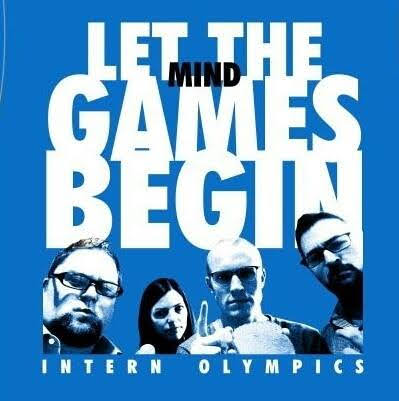
A graphic detailing the Intern Olympics that we created and competed in when we weren’t treating clients.
Yes, there were T-shirts.

Episode 9: Re-Authoring Our Lives: Self-Directed Stories

Psychology Life Lessons is a podcast where we listen in on conversations with psychology experts and try to extract life lessons, and maybe a little wisdom.

Episode 9: Drs. Luke Russel and Chang Su-Russell

In this episode, Dr. Dan Lannin has a conversation with Drs. Luke Russell and Chang Su-Russell from Illinois State University. Luke studies resilience in relationships, and especially within families of divorce and stepfamilies. Chang studies development in early childhood and socialization to being a sibling and topics like race/ethnicity, and death/dying.

The conversation starts with a discussion of narratives, and how the stories we tell influence our identity and even the lives of our families. Dan’s jaw drops when Luke tells a story of how he talked to himself in college when he looked in the mirror. Chang talks about the importance of meeting basic psychological needs like autonomy, competence, and relatedness–core aspects of Self-Direction Theory.

Importantly, in this episode we learn that Chang once spent a month in Tibet, and that Luke would enjoy a quiet evening with Genghis Khan.

Dr. Luke Russell

Dr. Luke Russell is an Assistant Professor in the Department of Family and Consumer Sciences at Illinois State University. His research investigates how individuals living in diverse family structures (single-parent, post-divorce, stepfamilies) foster resilience and maintain family-members’ health and well-being. He also studies how broader social institutions (e.g., health care systems, schools, and government agencies) can function as supportive resources for such families. He teaches courses in communication and helping skills, family public policy, and enduring issues for couples and families. 

You can follow Dr. Russell on Twitter 

@LTR_HDFS

Dr. Chang Su-Russell

Chang Su-Russell earns a Ph.D. in human development and family studies from the University of Missouri. She is an Assistant Professor in the Department of Family and Consumer Sciences at Illinois State University. Her research focuses on the socialization of very young children in challenging contexts, including two major lines of research: parents’ socializing children through the discussions of challenging issues (race and deaths) in response to current societal-political events; parents’ socializing children transition to siblinghood in mainland China in the context of post-one-child policy.

She is a Co-Chair of Asian/Asian American Families Focus Group and the Communication Specialist for the Racial and Ethnic Diversity in Families Section at National Council on Family Relations. Currently, she serves on the Editorial Board for Journal of Family Psychology.

Disclaimer: the content on this site is for informational or educational purposes only, and does not substitute professional medical advice or consultations with healthcare professionals. Additionally, the opinions and viewpoints expressed in this podcast do not necessarily reflect the entities that employ the host or guests.

Episode 8: Be True to Yourself

Psychology Life Lessons is a podcast where we listen in on conversations with psychology experts and try to extract life lessons, and maybe a little wisdom.

Episode 8. Dr. David Vogel and Dr. Nathaniel Wade

In this episode, Dr. Dan Lannin has a conversation with two prominent psychology researchers — Dr. David Vogel and Dr. Nathaniel Wade from Iowa State University. The conversation starts by talking about finding and pursuing passions in work and in life, and continues with thoughts on what it means to be true to one’s self. Both guests talk about their journeys to and within psychology research, and how different life events and decisions led them to where they are today. The conversation continues with Dr. Wade talking about how psychology opened up to him when he realized that “things are not always as they appear,” an idea that continues to permeate multiple areas of psychology.

Importantly, in this episode, which we’re now calling Inklings 2, we learn that David once sculpted an award-winning squirrel, and that Nathaniel once learned a choice combination of words at the racetrack.

If you’re interested in checking out their book, here is the link: The Cambridge Handbook of Stigma and Mental Health

Dr. Nathaniel Wade

Following his undergrad graduation (with a Psych BA in 1994) Nathaniel worked for 4 years as an Addictions Counselor in both an abstinence-based agency and a methadone clinic. He then went to graduate school for Counseling Psychology at Virginia Commonwealth University. He finished his PhD in 2003 and joined Iowa State that same year. He is now a Professor of Psychology and Founding Director of Network Community Counseling Services. He is a licensed Psychologist in the state of Iowa and a Certified Group Psychotherapist.

Nathaniel’s research interests center on the processes and outcomes of psychotherapy. Specifically, he has worked to develop and test interventions to promote forgiveness, to understand the impact of integrating religion and spirituality into psychotherapy, and to explore interventions to reduce the stigma associated with seeking counseling. When not working, he spends time with family, hikes in the mountains of NH, listens to podcasts and audiobooks while puttering around the house doing chores, and plays soccer each week with the “older people.”

Dr. David Vogel

David L. Vogel is a Professor in the Department of Psychology at Iowa State University (ISU), a Fellow of the American Psychological Association (APA), and a licensed psychologist in the State of Iowa. He is the Director of the ISU Interdisciplinary Communication Studies program. His professional interests focus on issues of diversity with specific attention to the role of stigma and stereotyping as they are applied to psychological health and the decision to seek therapy.

David has published over 120 peer-reviewed articles and has given over 100 national conference presentations. His research has been supported by grants from the National Institute of Mental Health, the Department of Defense, and the American Psychological Foundation. Current work is focused on developing interventions that will help reduce stigma and increase the likelihood that people in need will seek quality mental health care services.

Disclaimer: the content on this site is for informational or educational purposes only, and does not substitute professional medical advice or consultations with healthcare professionals.

Episode 7: The Good Life: A Process, not a Destination

Psychology Life Lessons is a podcast where we listen in on conversations with psychology experts and try to extract life lessons, and maybe a little wisdom.

Episode 7: Dr. Andrew Seidman

In this episode, Dr. Dan Lannin has a conversation with Dr. Andrew Seidman, a researcher at the University of Pittsburgh. Andrew starts the discussion by talking about the importance of getting universal human needs met–like being validated, accepted, and finding “existential comfort.”

The conversation moves to a discussion of mental health and the effects of social media. We reflect on how the sheer quantity of online exposures and interactions can be overwhelming, and how social media offers “instant solutions” to boredom that might not always be as helpful as they appear. Andrew’s second life lesson emerges from a quote from Carl Rogers, that “the good life is a process, not a destination,” and notes that life is really lived in the moments when we are not distracted. We both reflect on the importance of establishing community with smaller networks of people, and how local relationships can be life-giving.

Importantly, we muse on who would win in a fight — Carl Rogers or Mr. Fred Rogers. Spoiler alert, the winner’s last name is Rogers.

Dr. Andrew Seidman

Andrew Seidman is an NIMH Postdoctoral Research Scholar at the University of Pittsburgh, Department of Psychiatry. His program of research focuses on the psychological consequences of societal ills such as stigma and discrimination, and how a sense of personal and collective identity can protect against its effects. 

Disclaimer: the content on this site is for informational or educational purposes only, and does not substitute professional medical advice or consultations with healthcare professionals.

Episode 6: Authentic Selves — Acceptance, Interconnectedness, and the Stories We Tell Ourselves

Psychology Life Lessons is a podcast where we listen in on conversations with psychology experts and try to extract life lessons, and maybe a little wisdom.

Episode 6: Dr. Diane Zosky and Marcia O’Donnell

In this episode, Dr. Dan Lannin has a conversation with Marcia O’Donnell and Dr. Diane Zosky–two social workers at heart. Marcia reflects on her journey through a serious illness, and how it stripped away different false selves and fostered self-acceptance. Diane reflects on her own transitions in her life, and how big changes and transition can prompt a process of “returning to oneself.” The conversation touches on how people can get meaning, even amidst the every day “chasing” that often defines the first half of life. There is also a life lesson about the different narratives people sometimes use to defer accepting personal responsibility and avoid taking ownership of the choices we have at our disposal.

Importantly, we learn that in a perfect world Diane and Marcia would ideally be sitting down for beers with Nelson Mandela and Jesus.

Marcia O’Donnell

Marcia O’Donnell is a Licensed Clinical Social Worker in private practice and former adjunct professor and clinical supervisor in the Department of Social Work at Illinois State University.  Her primary areas of practice are with individuals experiencing anxiety, cancer, and complex developmental trauma.  She completed training with Dr. Bessel van der Kolk through the Trauma Research Foundation and had the fortunate opportunity to be directly supervised by him.  

Dr. Diane Zosky

Dr. Diane Zosky is Dean Emeritus of the College of Arts and Sciences and former Director and Professor Emeritus from the School of Social Work at Illinois State University. She is a clinical, licensed social worker and her practice and research experience centered on interventions with perpetrators of intimate partner violence as well as training on the trauma impact on child witnesses of IPV.   She is the former president of the IPV certification agency, Illinois Certified Domestic Violence Professionals and is on the editorial board for the journal Partner Abuse.

Disclaimer: the content on this site is for informational or educational purposes only, and does not substitute professional medical advice or consultations with healthcare professionals.

Courage and Rejection

During my recent podcast with Drs. Arellanes and Ferraro, we talked about the benefit of leaning into awkward situations rather than avoiding them. Approaching (rather than avoiding) situations where we fear rejection can often be helpful for our mental health, and may create new opportunities that we could not have foreseen.

It reminded me of an interesting story I heard a few years ago. Jia Jiang experimented with being rejected. He spent 100 days getting rejected, doing things that would likely be looked at as awkward, or he would ask for things that most people would not give him. He decided to NOT play it safe for 100 days, and see what would happen.

Some of the things Jia tried were things that my kids would call “total cringe” if I tried them, but interestingly you’ll likely see these types of things on TikTok racking up millions of views. These are things like asking to borrow $100 from a stranger, dancing while being filmed by a security camera, or fixing a PC at the Apple store. Jia’s experiments with rejection landed him the opportunity to give a Ted Talk and he now even has a rejection therapy game where you can try out some of these “reject-able” activities yourself.

Doing the Things We Fear

I’m not advocating that you do strange things just for the sake of doing strange things (unless of course, you want a TikTok following…). But, I think Jia’s experiment with rejection has some important connections that might be relevant to mental health.

  1. Sometimes our fear of being rejected is worse than what we will actually experience if we try an activity. It turns out that we are pretty bad at predicting the future. So, our idea of what will happen does not always turn out to be what actually happens. People end up not rejecting us, but embracing us; people might just ignore us or not pay attention; people might actually be kind; life might be a bit more fun.
  2. People habituate to rejection. Habituation basically means that the same stimulus stops eliciting the same reaction. This goes for pleasant stimuli, but also for unpleasant stimuli. Six months after buying a new sports car, life with that car starts to feel boring and mundane again. That’s habituation. It’s the same with rejection. The first time hurts, as does the second (but a little less), and the third, and the fourth. But by the 10th time, rejection elicits a noticeable smaller reaction and less pain. Sales experts understand this because their jobs involve getting rejected all the time. Exposure to rejection makes rejection less scary, and less unpleasant.
  3. People regret not being courageous. James Pickering, a hospice nurse writes about the top 5 regrets he’s observed from people on their deathbeds. Number 1 is “I wish I’d had the courage to live a life true to myself, not the life others expected of me.” If you have a chance, I recommend reading the other 4 regrets — courage is a big part of almost all of them.

Pushing Through Fears of Rejection to Live a Better Life

The purpose of all of this is to develop couragethe ability to do something that you fear. Courage is a virtue, and like all of the virtues, it is inherently rewarding.

A few weeks ago my family was visiting the old summer camp I used to work at in my late teens and early twenties. There is a tree swing there that you have to climb up onto a tree house to get on, and once you’re on–it swings out 30-40 feet. My daughter wanted to do it, but when she got onto the tree house, she started doubting herself; she was ready to back down. Fortunately, the people who were there helped encourage (interesting how courage is the root of that word…”put courage into”) her, and she swung on the swing. After she did it one time, she wanted to just keep doing it, and doing it, and doing it. Courage helped her experience the joy that her fear was preventing.

Alfred Adler, one of the seminal figures in psychology in the 20th century (even has a professional psychology school named for him in Chicago) understood the importance of courage. He believed that most people were not sick. but demoralized. They don’t need to be fixed, but to be filled with courage. They need the courage to do important things, and that courageously trying to accomplish their goals would lead to true self-esteem–more than any affirmation or compliment could provide.

Ichiro Kishimi explores Adler’s ideas in great detail in his book, The Courage to Be Disliked: The Japanese Phenomenon That Shows You How to Change Your Life and Achieve Real Happiness.

If you had all the courage you needed, what would you try this week?

Disclaimer: the content on this site is for informational or educational purposes only, and does not substitute professional medical advice or consultations with healthcare professionals.

Episode 5: Navigating Academia–Connections, Kindness, and Not Burning Bridges

Psychology Life Lessons is a podcast where we listen in on conversations with psychology experts and try to extract life lessons, and maybe a little wisdom.

Episode 5: Drs. Arellanes and Ferraro

In this episode, Dr. Dan Lannin has a conversation with Dr. Jordan Arellanes and Dr. Anthony Ferraro. They reflect on their experiences navigating academia, both in training and as professionals. Jordan reflects on the importance of developing and maintaining relationships, and how beneficial it can be to lean into some of the experiences that might seem awkward (like approaching people at conferences). Anthony mentions the value of kindness, and the conversation moves into a discussion about mentors and why burning bridges is not the best idea.

Importantly, we learn that Jordan has picked up some unique phrases from the movie Clerks 2, and that Anthony knows a lot about early United States history.

Dr. Jordan Arellanes

Jordan Arellanes is an Assistant Professor of Developmental Psychology at Illinois State University; https://orcid.org/0000-0002-5190-0688. He is a mixed methodologist who studies inclusion, diversity, equity, and action (IDEA), Latino school success, and fatherhood. Arellanes’s research focuses on how people develop their roles in society and how the influence of others (friends, parents, teachers, coaches) impacts the desire to maintain or adapt to those societal roles. It is his belief that systemic changes begin with positive relationships and experiences. Recently, his work has been published in Teaching of Psychology, the Journal of Latinos and Education, and the Journal of Research in Personality.

Dr. Anthony Ferraro

Anthony Ferraro is an Associate Professor in the Department of Applied Human Sciences at Kansas State University. He currently serves as one of the co-directors for the Divorce Education Assessment Collaborative, is the Chair of the Family Policy section of the National Council on Family Relations, and sits on the editorial boards for both Family Court Review and the Journal of Divorce & Remarriage. He has been recognized for his contributions to the mentoring of undergraduate and graduate students by the Advancing Family Science section of the National Council on Family Relations with the 2020 Emerging Mentor/Teacher Award and by the College of Health and Human Sciences at Kansas State University with the 2022 Hulsing Mentoring Prize. His research focuses on adjustment during periods of stress and transition, with an emphasis on divorce and co-parenting relationships. Follow him on twitter @docferraro if you want a healthy dose of higher ed nonsense and shenanigans! 

Disclaimer: the content on this site is for informational or educational purposes only, and does not substitute professional medical advice or consultations with healthcare professionals.

Episode 4: Sport Psychology–Addressing the Whole Person, Systems, and Vulnerability

Psychology Life Lessons is a podcast where we listen in on conversations with psychology experts and try to extract life lessons, and maybe a little wisdom.

Episode 4: Dr. Joey Ramaeker

In this episode, Dr. Dan Lannin has a conversation with Dr. Joey Ramaeker, the director of sport psychology at the University of Notre Dame. Joey and Dan talk about issues relating to sport psychology, but also general tips for non-athletes. Joey talks about his journey to becoming a sport psychologist and offers some great life lessons. Joey starts out talking about the importance of taking a wholistic view of athletes as people. He busts some myths about Kobe Bryant’s approach to sports and talks about the importance of considering the different systems that surround athletes–from teams, to families, to larger social structures. Joey also talks about the importance of helping athletes manage conflict in appropriate ways, and how creating a safe psychological environment can help healthy types of communications thrive. The last life lesson centers around the idea of vulnerability–how elite manage the inherent physical and psychological vulnerability and uncertainty in their sports.

Importantly, we learn that Joey loves The Notorious B.I.G. and invests in things that touch the ground (e.g., beds, shoes, couches, etc.). Dan manages to squeeze out a few tips from Joey on how to improve his pickleball game.

Info on Dr. Joey Ramaeker coming soon!

Disclaimer: the content on this site is for informational or educational purposes only, and does not substitute professional medical advice or consultations with healthcare professionals.

Episode 3: Romantic Relationships–Contextualize, Diversify, and Argue When Needed.

Psychology Life Lessons is a podcast where we listen in on conversations with psychology experts and try to extract life lessons, and maybe a little wisdom.

Episode 3: Dr. Jeremy Kanter and Dr. Amy Rauer

In this episode, Dr. Dan Lannin has a conversation with Dr. Jeremy Kanter and Dr. Amy Rauer–both from the University of Tennessee. These two professors are experts on romantic relationships, having conducted important research in the field. Jeremy starts the conversation off with a discussion about the importance of considering a couple’s context when giving and receiving relationship advice. Amy mentions the importance of investing in multiple relationships, and talks about the salience of the often ignored “weak ties” that we all have. There are also great insights about perspective-taking and the fact that conflict is normal and inevitable. Most importantly though, we learn that Amy drinks chocolate almond milk.

Jeremy Kanter, Ph.D., is an assistant professor in Child and Family Studies at the University of Tennessee. He received his PhD in Human Development and Family Science at the University of Missouri. His research broadly investigates how cognitive and behavioral components of relationships develop in context. In particular, his research highlights how poverty-related stressors influence change and stability in relational processes and the implications of these changes on mental health. 

You can follow Dr. Kanter on Twitter @JeremyBKanter 

Amy Rauer (Ph.D., Developmental Psychology, University of Michigan, Ann Arbor) is a Professor and Director of Graduate Studies in Child and Family Studies at the University of Tennessee at Knoxville. Her work focuses on how intimate relationships develop as the individuals within them grow and change over the lifespan. She has published widely in both developmental and family science journals, and her work has been recognized multiple times by the National Council on Family Relations and the International Association on Relationship Research.

Disclaimer: the content on this site is for informational or educational purposes only, and does not substitute professional medical advice or consultations with healthcare professionals.

Episode 2: Honoring our Pain, Starting an Anti-Guilt Society, and Owning Our Voice.

Psychology Life Lessons is a podcast where we listen in on conversations with psychology experts and try to extract life lessons, and maybe a little wisdom.

Episode 2: Dr. Yi Du and Dr. Raquel Botello

In this episode, Dr. Dan Lannin has a conversation with Dr. Yi Du and Dr. Raquel Botello — two counseling psychologists. The conversation starts off with a discussion about how we approach our pain, and then goes into how we often try to predict and control the future rather than appreciating the present and the past. There are also great life lessons about what it means to be “good enough,” how to “own our voice,” and why it can be important to cast off unnecessary guilt.

Dr. Yi Du, Ph.D.

Yi Du, Ph.D., is a licensed psychologist in California. She received her PhD in counseling psychology at Iowa State University. She is currently transitioning into a new consulting position, and prior to this she has worked extensively at university counseling centers. Her last job was working as a counseling psychologist at Counseling and Psychological Services of University of California, Berkeley. She also maintains a small private practice and provides individual therapy and supervision.

Dr. Du’s extensive clinical expertise include multicultural counseling, emotional awareness, college adjustment, identity development, depression/anxiety, relationship concerns and psychological assessment. Originally from China, Dr. Du has provided consultation and supervision for hundreds of Chinese counselors-in-training.

Info on Dr. Raquel Botello coming soon!

Disclaimer: the content on this site is for informational or educational purposes only, and does not substitute professional medical advice or consultations with healthcare professionals.

Psychological Flexibility and Mental Health

I’ve been reflecting on my recent podcast with Dr. Jordan LaBouff and Dr. Eric Wesselmann. One of the interesting life lessons that Jordan mentioned was that people should hold their convictions close, but loosely (paraphrasing here), which got us into a great conversation about psychological flexibility. Below are some of my thoughts on psychological flexibility, with a few tips at the end on how we might promote it!

What is mental health anyway?

For decades and decades, definitions of mental health have come and gone. Most tend to emphasize a lack of symptoms, or a state of happiness and well-being, or how adaptively a person functions in their environment. In the last 30 years though, another definition has begun to gather some traction — mental health is psychological flexibility. Kashdan and Rottenberg (2010) note that psychological flexibility entails the ability to adapt to situational demands, to shift mindsets or behaviors when needed, to maintain balance among the different aspects of life, and to be aware of and committed to acting inline with personal values. Cool stuff.


Before, we get into psychological flexibility again, here’s a quick related detour to talk about serotonin (skip to the next section if neuroscience isn’t your thing). Often older psychology textbooks would highlight the role of serotonin as “the happy neurotransmitter,” and because of this many people thought of (and still think of) depression as a chemical imbalance. I’ve even heard people say, “I’ve got to go for a run today to boost my serotonin levels. The simplicity of the explanation is probably why it continues to stick around–low levels of “happy chemicals” make me sad.

But, research scientists have known for years that there really isn’t much of a link between serotonin levels and depression (Moncrieff et al., 2022). Medications that positively impact certain types of serotonin activity in the brain (SSRIs–Selective serotonin reuptake inhibitors) are effective – especially for those with more severe depression (Kirsch et al., 2008). But, how do these “serotonin” medications really work? The truth is that scientists do not really know. Of course, scientists have very educated guesses, and evidence to support different theories–but the role of serotonin is still somewhat mysterious. So, as of right now, we’re in the interesting time period where we have an effective treatment, but we are unsure of how it affects the brain.

One interesting theory, as you’ve probably guessed, is that serotonin has an important role in encouraging psychological flexibility (Shine et al., 2022). One type of serotonin may be involved in brain processes that help accepting and living with stress (passive coping), whereas another type appears to be involved in actively changing one’s thinking of behaviors to address stress more directly (active coping; Carhart-Harris & Nutt, 2017).


All of this is to say, it appears that being able to flexibly react and respond to stress is at the core of living our best and healthiest life.

Tips for Being More Psychologically Flexible

As you can imagine, there is no “magic bullet” for increasing our psychological flexibility, but here are a few tips to consider:

1. Find a good therapist. Self-help can be a useful tool, but nothing beats walking alongside a psychological expert while you pursue mental health. Therapists who focus on Acceptance and Commitment Therapy (also called ACT) specifically work on helping clients develop psychological flexibility. To find one, you can try this link. Interestingly, a recent meta-analysis (study of studies) found that ACT is effective, and at least as effective as many established types of therapy (including Cognitive-Behavioral Therapy, considered by many to be the “gold standard” in talk-therapy for depression; Gloster et al., 2020).

2. Mindfully attend to the present moment. There is something beautiful that happens to our minds and our behavior when we focus on the present–letting go of worries about the future or ruminating on the past. Jon Kabat-Zinn, the preeminent guru of mindfulness defines mindfulness as “awareness that arises through paying attention, on purpose, in the present moment, non-judgmentally.” There are several ways to encourage mindfulness, and here are a couple online links to get started Mayo Clinic, Mindful.org, and some books by Jon Kabat-Zinn.

3. Be courageous when it comes to experiencing feelings. One of the observations that researchers and clinicians have made is that people who struggle with their mental health tend to avoid negative feelings and experiences (Akbari et al., 2022). This has been coined, experiential avoidance; it is essentially the opposite of psychological flexibility. People who engage in experiential avoidance tend to be afraid of their feelings, worry about not being able to control their worrisome thoughts and feelings, and believe that their emotions cause problems in their life (Bond et al., 2011). Avoiding our thoughts and feelings, like avoiding anything scary, keeps us stuck where we are–and unable to move forward.

A bit of unsolicited advice on being courageous with feelings. First, for those who have experienced trauma or are currently experiencing PTSD symptoms, please consult with a mental health professional. Second, for many it can be helpful to gradually disclose some of your thoughts and feelings to trusted friends and family. Third, a writing activity called emotionally-expressive writing has been found to be very helpful for approaching some of those feelings people often try to avoid–and it is linked to all sorts of positive outcomes (Pennebaker & Smyth, 2016). Here is a link on how to get started.

Disclaimer: the content on this site is for informational or educational purposes only, and does not substitute professional medical advice or consultations with healthcare professionals.

Episode 1: Humility, Ostracism, and Psychological Flexibility.

Psychology Life Lessons is a podcast where we listen in on conversations with psychology experts and try to extract life lessons, and maybe a little wisdom.

In this episode, Dr. Dan Lannin has a conversation with Dr. Eric Wesselmann (Illinois State University) and Dr. Jordan LaBouff (University of Maine) — two social psychologists. The conversation starts off with a discussion about the virtue of humility, one of Jordan’s areas of expertise and then moves onto life lessons about social exclusion and psychological flexibility.

Jordan LaBouff is an Associate Professor of Psychology & Honors at the University of Maine where he has worked since receiving his Ph.D. from Baylor University in 2011.  He is a social psychologist who focuses on people’s beliefs (religious or otherwise) and their behaviors (from acting humbly, to prejudice and discrimination).  

Dr. LaBouff’s website: https://umaine.edu/psychology/jordan-labouff/

Eric D. Wesselmann, PhD, is a professor of psychology at Illinois State University. He studies the dynamics of social inclusion and exclusion in daily life. He also uses popular culture in teaching psychology, both in the classroom context and on podcasts and convention panels. He is a member of the WGLT Psych Geeks and co-curates film programming and writes a blog for his local independent theater (The Normal Theater; Film CULTure).


ISU website: https://psychology.illinoisstate.edu/faculty/all/profile/?ulid=edwesse

Twitter: @EricWesselmann